Northern Advocate Column

It’s hard not to be hypocrite

11 June 2016

I’m a hypocrite. Perhaps for many things, but in this case for flying to Sydney on a working holiday with my partner. God knows how much carbon our plane jettisoned into the skies above the Tasman Sea.

As much as I know we have to collectively reduce carbon emissions, I’m also an individual with personal desires and wishes. I like to have new experiences and catchup with friends who live far away. Travel is one of the modern world’s great pleasures. Unfortunately one that’s in contradiction with a more localised and simpler way of life that my rational brain knows we have to move towards.

The grim mathematics of energy use and dissipation in the earth’s atmosphere is frightening. If we burn all remaining reserves of fossil fuels, or even most of them, the earth will be uninhabitable for humans. This is our version of the Four Horsemen of the Apocalypse. 

I’m not convinced, however, that scary tales of the apocalypse or eternal damnation in hell were ever a big influence on behaviour. Fear of being shunned and shamed by friends, families and your community is far more powerful. That and internalised guilt, when you know you’ve strayed from the dominant morality of the culture you live in. Is it guilt I feel at taking a trip in a plane to another country? There’s an uneasiness to my holiday fun. Living in a global community facing a global problem of excess energy use by a minority seeps into my sense of self.

Is our morality changing then? A shifting morality is going to create anxiety and resentment, plus disbelief and a refusal to budge. There will be leaders of change and there will be laggers, and most of us somewhere in between.

Simplifying my life and renouncing excessive materialism is something I can aim for, but the political path of change is, for me, still concealed in a dense smog. Never-the-less, some good things are happening. Coal-fired power stations are being destroyed in China. Solar power is growing in use. And I keep coming back to one thing I know must happen, from which I think so much more about our lives will change, which is the transformation of the way we produce food. A local and organic small-scale agriculture that integrates tree crops with animal husbandry will mean less fossil fuels are burnt, and crucially, carbon will be taken out of the air and sequestered in organic material. It has to be the future, and soon. 

Tomorrow I’m going to buy some fruit and nut trees and offer them to anyone in Hikurangi who wants them. This will be my version of the carbon credits scheme, currently failing. I’m prepared to offset my air travel, but I want to see real trees for my money. Will this absolve my sense of guilt? Probably not. Is it a small step in the right direction? I think so. I’m still a hypocrite, but I’d rather be a hypocrite than a cynic. British environmentalist George Monbiot recently wrote that hypocrisy “is the gap between your aspirations and your actions… the alternative to hypocrisy isn’t moral purity (no one manages that), but cynicism. Give me hypocrisy any day.”

Standard
Art, Northern Advocate Column

Two figures by Anneke Muijlwijk

Configuration - Beach - mixed media on paper 510x410mm28 May, 2016

Two figures, one female, the other, given the shape of the shoulders and arms, must be male. The woman is drawn in outline with charcoal and pencil. The masculine figure is composed of blocks of five colours, painted in thin washes of watercolour paint. It’s like he’s wearing the costume of a circus acrobat, like Picasso once painted.

The woman is seated on a blue couch, her legs tucked up close to her, one hand on the armrest and the other on her thigh just above the knee. She’s is posed, as women have posed naked in art for centuries, as objects of desire and beauty for a masculine gaze. Except, her head leans back slightly, unnaturally, which undermines the attempt at holding a relaxed position on the couch. There’s a tension in the pointed shoulders. It’s awkward. Made more so by the looming figure of the featureless male that overlays the woman.

Is it a loving embrace he’s trying to give? Or something else? The blue arm with a clenched fist passes through the woman’s face like a comic-strip punch. The dull green head bends over from the torso in what looks like despair or regret. Yet as we’re focusing on the male figure, the green head highlights the features of the woman’s own face, the blue arm highlights her eyes. The artist cleverly brings our attention back to the woman, who always remains at the centre of the picture, seemingly in control. 

What is the relationship between these two figures? Their overlaying suggests a disjunction of time; they’re not in the same place together. Has the women removed herself from the relationship? It’s the male figure that is active, encroaching into her body space, but he’s getting no reciprocal response. She leans back calmly, possessed of an inner integrity, her hands remain in place. Even though the male figure is blocked-in with colour, the lines of the woman can still be seen, rendering him transparent. He’s a ghost, a shadow, his position on the couch impossible in real life. He invades the picture, but he doesn’t dominate it.

This painting by local artist Anneke Muijlwijk has a sad beauty that speaks to me of the transience of human relationships, which very rarely exist in a perfect now. The novelist Leo Tolstoy once said that what was interesting about a man and women getting together was not the romance and entanglement leading to marriage, or that kiss that concludes today’s romantic comedies, but rather what happened afterwards. That, he thought, was the source of drama which made for a good story.

It’s not easy to suggest a story in one image composed on a piece of paper. Muijlwijk has achieved this and left me speculating at the possible drama. It holds my attention like few artworks do. Its success comes from a balance between mystery and a concrete grounding in real human emotions. I can identify with both figures. We’ve all been each of them. That universality cuts to the core.

More of Anneke Muijlwijk’s paintings and drawings can be viewed on her website: http://www.annekem.co.nz  Or look out for showings of her works in Whangarei’s local galleries.

Standard
Northern Advocate Column

Discovering figs, a revelation

260ff932babb600ce4b67bf86c2d409816 April 2016

These last few years I’ve been trying to transform my Hikurangi section into a little piece of the Mediterranean (deluded I know) by planting olive trees, oranges, lemons, grapes and figs.

It’s the figs that have been a revelation. I’m almost embarrassed to admit that I didn’t eat a fresh fig until I was over 40. It’s not a fruit that had broken into the mainstream of New Zealand fruit eating. This probably has something to do with the fact that figs don’t last long once picked from the tree, which is no good for supermarkets that have so powerfully shaped our eating habits.

The first fig variety I planted, purchased from an orchard on Apotu Road, had a red flesh and earthy sweet taste that got me hooked. I’ve subsequently planted another variety with paler flesh that has more of a honey flavour.

There’s definitely something sensual about the lush juiciness of a perfectly ripe fig. Rather than the apple I reckon it must have been the fig that was the forbidden fruit in the Garden of Eden. I just don’t find a hard crisp apple particularly sexy.

To me the fig is a fruit that fills your tummy like a banana. Perhaps that’s got something to do with their soft texture combined with a high fibre content. I’ve been eating them in salads and on toast with cream cheese for breakfast and lunch. Divine. They’re also particularly good on a pizza.

Fig trees grow quickly and fruit in their first year, so you get instant gratification (unlike the walnut tree I planted, which I’ll be waiting 10 years to eat my first nut).

In searching for info on figs I found out that the fruit is not strictly a fruit at all, it’s a receptacle for the flowers, which bloom internally. Old varieties of figs used to be fertilised by a fig wasp via a small opening at the base of the “fruit”, but modern cultivars are able to fruit without fertilisation; a mysterious process that encourages another biblical allusion, to the immaculate conception of the Virgin Mary. Another oddity is that they can fruit twice a year if the conditions are right, once before Christmas and then the main crop in March and April.

Figs have no major pest problems, that is, except birds. Unfortunately I have a gang of sparrows that perch themselves in a nearby totara, eyeing up the figs for when they reach their perfect sweet ripeness. They ravenously peck out the flesh, leaving the massacred remains of the fruit dangling from the tree.

Northland has the perfect weather for growing figs, and they’ll grow in even poor soils. You just need to apply mulch around the base of the tree and perhaps some lime once a year. They need a good amount of water to get the best harvest. This summer has been perfect.

I’m hoping in a few more years the first tree I planted will be big enough to sit under, perhaps I might achieve some enlightenment in the process, like the Buddha did under the bodhi tree, which apparently was a very old and large fig tree.

Standard
Art, Northern Advocate Column

Art, it’s a tough gig

img_12855 March 2016

Art is an opinionated business. If you’re an artist it’s advisable to develop a thick skin. Sometimes difficult for sensitive souls, which artists usually are. I’ll always remember a conversation at a gallery opening in Auckland with a young art critic who politely told me my work was shit (in art speak, but that was the gist of it). Can you do that to someone’s face I was thinking? Is this what it’s like in the big city art scene? It was hard to continue with any chit-chat after that and he wandered off to talk to someone else. I staggered towards the table with the free wine. 

After a less than appreciative comment about my work in a long gone arts publication read by hardly anyone — or only the people that mattered, depending on how you look at it — I took to my bed and imagined my revenge on the insensitive and obviously braindead reviewer. 

And so here I am considering what to say about an art exhibition by two local artists at the Whangarei Art Museum, Dave Beazley and Murray Gibbs. Should I try to explain the work? What tone shall I use? If I write something negative will I get a rude email or be ignored at a gallery opening?

Actually, what I most want to say is simply how great it was to step into the museum and see a body of work by artists who are “local and alive”. Under new director Ruth Green-Cole and a team of other female staff the museum looks like taking a new direction, one that I’m sure Whangarei artists and many arts supporters will be welcoming. 

As for the work of Beazley and Gibbs, it’s just my opinion, but I think it stacks up well against art being produced anywhere else in New Zealand. Both artists are engaged with our contemporary world and its problems. Both are craftsmen; Gibbs with the humble graphite pencil, sculptured clay and metal. Beazley renders in detail highly imaginative mutant cartoon characters using oil paint. 

Beazley’s work should hit the spot with Nickelodeon fans. There’s a vibrancy and irreverence to the work, but always laced with darker tones and the sadness of lost innocence. It would be a good exhibition for high school art teachers to take their classes along to. 

The curatorial team has produced a small booklet full of colour reproductions of Beazley’s work, along with an interview with the artist. If you purchase a copy for $5 you get a free original ink drawing. A nice touch. In the booklet there’s a quote by Beazley that I like, he says: “My own art practice is not a place where I relax or release my soul; the beach is my place for that. I take my art relatively seriously as my job.” 

Creating art that speaks to people is not an easy thing; it requires an enormous amount of work and dedicated professionalism. And it must, I believe, seek a relationship with an audience. As tough as it is to show work in public and invite criticism, it’s essential to achieving art that has any relevance to people’s lives. 

Standard
Northern Advocate Column

In love with broad beans

s-l30031 October 2015

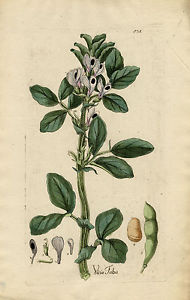
I’ve fallen in love with broad beans. It’s a late romance. As a child there was only antagonism. And after that our paths didn’t cross for many years, not until a recent interest in growing my own food.

My initial decision to plant broad beans was based on a desire to grow a vegetable that was high in protein (around 26g per 100g). And like all legumes they take nitrogen out of the air and fix it in the ground, thus I’d be maintaining an essential element in the soil for other plants.

I figured that once I had grown the broad beans I would learn how to enjoy eating them. So when faced with a bountiful harvest I turned to Google to find some recipes. This led me to the Egyptian national dish called ful medames, which consists of boiled broad beans (or fava beans as they’re known) mashed with olive oil, salt and cumin. The dish is typically eaten with bread for breakfast. It was a taste revelation, especially with the addition of a little garlic. I then tried broad bean hummus, followed by frying shelled broad beans in oil and drying them to create a snack that’s popular in Latin America and China.

Part of my love affair with the broad bean is the romantic connection it offers to other cultures and countries. Because the bean is so easy to grow, even in poor quality clay soils, it’s been part of the Mediterranean diet for 6000 years. Hence its importance to many peoples across Europe, the Middle East and North Africa. The fact that it can survive winter and provide a vital food source in early spring, when there’s little else to harvest, has probably contributed to its importance. 

The broad bean was a staple of the ancient Greek and Roman civilisations. In Greece, dried beans were used as voting tokens in the democratic assemblies of city states. The bean was considered to be a food of the dead in many cultures and used in offerings to deceased ancestors. Another reason the broad bean was revered by Mediterranean cultures was that the outside of the bean was thought to look like female genitalia, while when peeled a small penis and testicles were revealed. Such an amazing phenomenon had to be special! Next time you’re peeling a broad bean look closely.

I’ve currently got copious broad bean plants growing all over my backyard. Their speed of growth in early spring is amazing, which is perhaps the origin of the story of Jack and the Beanstalk. Next to them in the garden are tall artichoke plants, which has given me an idea for the next broad bean recipe I want to try: a Greek dish of lightly boiled early season broad beans with artichoke hearts, onion, lemon, olive oil, parsley and dill. Eating it I’ll be able to imagine myself outside a white-washed brick taverna on a sun-soaked Greek island. That’s what food can do for you, transport you to another time and place. Knowing something of the stories, traditions and landscapes attached to a food as humble as the broad bean can make it taste that much nicer.

Standard
Northern Advocate Column

Sun worshipping,

17 October 2015

I’m sure I’m not the only one who has rejoiced at some clear sunny days recently.  A few days of sunshine and I’m instantly feeling better about the world.

At our place the timespan of winter is marked very clearly. For almost three months exactly the sun goes down behind the Hikurangi hill, casting our house in early shadow. For us, the arrival of spring and the end of winter depression is signaled by the sun descending for the first time just past the southern slope of the hill. Given that the silhouette of this old volcanic cone is so distinctive it’s a visually captivating occurrence; it’s like the sun is sliding down the hillside. This momentous event is duly celebrated with a particular ritual: sitting on the deck drinking chardonnay (sunshine in a glass).

I can’t help thinking that here are the ancient origins of our religious practices. All cultures and societies have placed importance on the sun and the changing seasons. Early people could not have failed to notice that the sun would appear at the same place every year in relation to a prominent feature of the landscape, as viewed from a particular spot or dwelling. Overtime this simple natural phenomenon became formalised into cultural ceremonies of a village or tribe, leading in some cases to the construction of places of worship like Stonehenge or the Inca temples to the sun god Inti.

The winter solstice, the shortest day of the year, has been important to many cultures; a logical time to consider rebirth and renewal, or just be thankful that the days are now going to get longer and warmer. 

The worship of the sun as the source of life is confirmed by modern science. Life in its most basic sense is the consumption of an energy gradient, the most vital being sunlight. The plant life, on land and in water, which converts the sun’s rays into energy and cell growth is the foundation of our planet’s ecosystem. Animals eat the plants and defecate; while both plants and animals decay after death to provide an energy resource for more life. Not to mention over millions of years the oil, coal and natural gas that has so far powered our technological society. In its full complexity and interdependence it’s an amazing process, one that can’t help but lead us to thinking about a holistic relationship between ourselves and all life, present, past and future. 

Understanding the ecology of our world, and the centrality of the sun to it all, would seem to be a good basis for cultural understanding between people. There are so many stories, songs and poems to share. I’m not one for ceremonies and formality, but if we were to build an architectural monument in Whangarei that marked in a dramatic way the arrival of spring, I’d be there.

To complete my holy communion with the sun would be The Beatles’ song, Here Comes the Sun; its irresistibly sweet melody like the early morning sunshine of a beautiful spring day. Sing after me: “Here comes the sun (doo doo doo doo)/ Here comes the sun, and I say/ It’s all right.”

Standard
Northern Advocate Column

The worlds first multiflagarious country?

12393759.jpg3 October 2015

When teaching art history I used to do a demonstration to make the point that images mean something to people. First, I held up a piece of A4 paper with the New Zealand flag printed on it. I ask if anyone would like to tear it to pieces. There was always someone happy to volunteer. I then asked the class how they felt about this. There was usually a mixed reaction, from indifference, slight anxiety, to loving this “radical” act. It was generally older students who might express some concern, the younger ones hardly ever. Next, I showed a picture of John Lennon and asked again if someone will tear it up. This time there was alway far more reluctance. But someone would, and there was a real sense of unease in the room. Being a big John Lennon fan, I myself often welled up. 

My purpose in telling this story? I think there’s something in the student reactions to my classroom demonstration that’s relevant to the current flag debate. We are all visually savvy, bombarded as we are by photos, brands and advertising. Added to this are all the images of people ― like musicians, celebrities and famous political figures ― who mean something to us because they represent our ideals and values. We pick and choose from the wealth of visual imagery available to us. And most often our identification with images transcends national boundaries. The direction of our popular culture is increasingly global. This is undermining, particularly amongst young people, any shared allegiance to a national identity and its symbols, other than perhaps on the sports field.

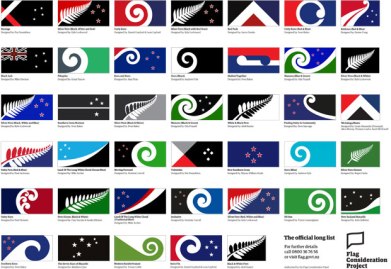
The four flag designs initially put forward for us to vote on were insipidly uninspiring. But it wouldn’t have mattered what they were, there would still be differences of opinion. I’m quite fond of the tino rangatiratanga flag, for instance. It’s visually strong and clearly means something to people who wave it at demonstrations or have it hanging on their front door, as someone down the road from me in Hikurangi does. That flag, however, was never going to be an option in a process driven by the prime minister.

Late on the scene is the red peak flag. This one is interesting, in that it eschews symbols that have a long history, like the silver fern or koru. It would look very striking being raised on a flag pole or at an Olympics medal ceremony. But doesn’t the colour red symbolise the left of the political spectrum? Could it represent a socialist utopia rising up in New Zealand? Certainly not the current reality, but a delicious irony. 

Whatever the outcome of the referendum, and it’s likely to be the status quo, perhaps New Zealand is destined to be the first multi-flag country (the word for this could be multiflagarious). Different designs have their supporters, while many people simply don’t care. In a world where we urgently need to see ourselves as global citizens first, rather than parochial nationalists, such good humoured flexibility would, I think, be very appropriate.

Standard
Northern Advocate Column

Dead fish, oil and the powerless council

5 September 2015

eight_col_dead_fish.jpgIt was a dead fish. Smelt, I suspect, like a dead fish. It was placed at the entrance to the Northland Regional Council building by people protesting the government’s plan to allow Statoil, a Norwegian company, to drill for oil off Northland’s coast.

As a symbolic action it had double meaning. One being the risk to the environment that any drilling accident would pose. Dead fish and much more if oil was to wash up on Northland’s coastline. Secondly, there was something fishy going on behind closed doors at the meeting between NRC councillors, government officials, and representatives of Statoil.

You would think the Northland Regional Council, given its role in overseeing the management of resources and the environment, would have authority over whether or not a foreign company could drill for oil off our coast. Apparently not, because the proposed drilling will take place more than 12 nautical miles from shore, beyond the NRC’s jurisdiction. It’s central government that’s given the green light to deep sea oil drilling, but if there were any accident it would be council (ratepayers) who would bare costs involved in any clean up, should oil threaten Northland’s coast. Smells fishy indeed.

And what of the emotional cost? The sea and beautiful coastline is a source of much enjoyment and happiness to Northlanders. Things start to smell even more rank when you consider what’s happening with the oil industry at the moment globally. Humanity has pumped out of the ground much of the oil that’s easy to get. Now it’s the hard stuff that oil companies are looking at. With difficulty comes greater risk.

Yes, the technology is there to build long pipes down through the ocean and into the earth’s unstable crust, but there’s no way such an endeavour is accident proof. We only have to consider the disaster that was the BP oil spill in the Gulf of Mexico in 2010. 4.9 million barrels of oil, over 87 days, flooded into the sea. The cost, in monetary and ecological terms, has been horrendous and ongoing. Local Maori are greatly worried that the ecology of Northland should be put at similar risk. Many other Northlanders, I’m sure, feel likewise.

So perhaps the most stinking aspect of all of this, is how we have no say over the decision. If any issue deserved to have an informed public debate leading to a referendum then it’s this one.

The main argument put forward by the government for allowing an overseas company to make profits from drilling oil in New Zealand’s territorial waters, is jobs. I’m deeply skeptical, given that any oil company is going to have its own skilled people and the drilling itself is heavily mechanised. The flow on effects to the local economy would be marginal. But the supporters of drilling can put this argument up, and those opposed will put their arguments. Then we vote in a binding referendum. That’s the clean fresh smell of democracy. Which is what this issue desperately needs.

One thing the NRC councillors could do, is go back to the government with this proposal: a binding referendum on deep sea oil drilling off Northland’s coast. As many other voices as possible should be added to this call.

Standard
Northern Advocate Column

A creepy parable of peak capitalism

430a27748f3853d3745bda9d32419fef_500x7358 August 2015

I recently watched the movie Nightcrawler [2014]. It’s about a young guy in Los Angeles, Lou Bloom, who’s trying to make money by various means, petty crime and generally hustling for a buck. Until he hits on the idea of listening to police radio and joining the “nightcrawlers” who rush to the scene of violent crimes and accidents to get video footage to sell to local television stations. It’s a competitive business. You have to get there before anyone else to get the best and most exclusive images. 

What made the movie utterly compelling was the performance of Jake Gyllenhall, as his character crosses each “moral boundary”. Lou parks illegally and runs red lights. He sneaks into the home of a family to get footage of gunshot holes in the fridge next to a photo of smiling kids. He discovers he has a real talent for composing shots that tug at the heartstrings. Exactly what the networks want. Getting the right shot progresses to dragging the victim of a hit and run, before emergency services arrive, into the best position for a dramatic image. All the while Lou is serving up corporate speak to his poor “intern”, whose role is to navigate the LA streets and park the car.

Each morally dubious action brings new rewards as he commands a higher and higher price for his work. To get what he wants, it seems logical to take the next step of orchestrating the violence. He tampers with the van of a rival, leading to it crashing. In the final gripping scenes he engineers a shootout between the police and two drug dealers in a fastfood restaurant because that’s where he wants it to take place for maximum viewer impact. At the end of the subsequent car chase he sets up his helpless intern, who, increasingly shocked at events is demanding to be paid more. The intern is shot dead by a cornered drug dealer, as Lou calmly catches it on video. He’s now inhuman, a psychopath, but one who’s rewarded at the conclusion of the film with more success, multiple media vans and a new team of eager young nightcrawlers.

We are horrified by this person. Yet it’s the economic forces that have created the demand for what Lou Bloom is happy to deliver. A society where footage of dying people can be turned to a profit. And that’s it isn’t it? We’re living in a period which could be described as peak capitalism, where everything is commercialised, from looking after the old, to sex and adultery, even that most human of qualities, friendship, has been effectively commodified. You can pay to kill rare and beautiful animals.

And of course big corporates are determined to mine, harvest, clear-fell and destroy ecosystems in search of profits, facilitated by national governments. This is the essence of what the Trans Pacific Partnership Agreement, the TPPA, is all about. Amidst the disagreements and competing interests there’s a shared belief in the unfettered right of corporations to commercialise every aspect of our lives, whatever the morality and whatever the threat posed to the environment and to our own humanity and survival in the long run. That’s why I’ll be joining the protest march against the TPPA leaving Tawera Park in Whangarei at 11am on Saturday 15 August.

Standard
Northern Advocate Column

Chickens are awesome

heritage-birds25 July 2015

I recently took a walk with my kids down the railway track that runs behind George Street in Hikurangi. What we noticed, nosing into backyards, was how many people had chickens. We had already joined this new urban trend, and we’re completely sold: chickens are awesome.

We got our three chicks from the Kamo Pet Shop for my daughter’s 10th birthday. They were given the lady-like names of Maurice, Rocky and Onkie-mo. After three months they were outside and laying everyday in the coop. We were eating eggs for breakfast, with stir-fried vegetables for lunch, and for dinner, mostly frittatas and quiches. They’re definitely fresher, even more so than free range eggs from the supermarket. The first thing we appreciated was how well they held together when poached.

But it’s not just those lovely packages of protein delivered daily that makes chickens awesome. There’s the chicken poo. I scoop it up from the convenient piles the make in the coop and put it in our compost bin. The kids are sometimes given the job of scooping chicken poo off the front lawn, but mostly it just washes into the soil with rain, fertilising my fruit and nut treeslike how nature intended.

It doesn’t stop there, however, because the chickens are doing a great job of keeping the edges along the fenceline clear, as well as generally being effective lawnmowers. They’re scratching about all day looking for insects and worms, and I’m guessing seeds, which means I don’t do as much weeding as I used too. I’ve read that they’ll scratch out moth larvae at the roots of fruit trees. I’m hoping this is true.

They’re fun to watch. One of the delights of being a chicken must be a dirt bath in the sun. Afterwards I’ve seen them lying down with their legs stretched out.

There’s something about the way they move around the lawn that’s predatory. Of course birds are descended from dinosaurs. If you’ve ever watched those BBC programmes on dinosaurs and you’ve seen a chicken run (surprisingly fast) then you’ll instantly see the connection to a pack of angry raptors. Those big legs get moving, like they’re cycling an invisible bike, and the head goes right forward for balance. It’s quite a transformation from your normal chicken pose.

The kids each have their favourites who submit to being cuddled. Onkie-mo is the most adventurous. She’s also the one who’s had “issues”, having gone broody a couple of times. The cure: solitary confinement away from the coop for 4 or 5 days.

While they fend for themselves over a roughly100 square metre area, we get chicken feed from the Ringrose Stockfood Factory, just up the road in Hikurangi. And they get leftovers: rice, cereal, stale bread, apple cores. Some people might be horrified, but we often put our plates and pans directly out onto the grass, they do a great pre-rinse.

There’s enough room on your average house section for a few chickens. It seems to me they’re an essential component in trying to live sustainably and taking responsibility for producing more of our own food. A few generations ago in New Zealand many families with land would have had chickens, going by the number of them in backyards in Hikurangi, that may well be the case again.

Standard