Northern Advocate Column

The art of travel in these Covid times

17 April 2021

Not being able to do something can give us the chance to reflect on that thing, weigh it in our minds, examine again its value to our lives. That’s the case with overseas travel, no longer possible for most of us thanks to Covid. 

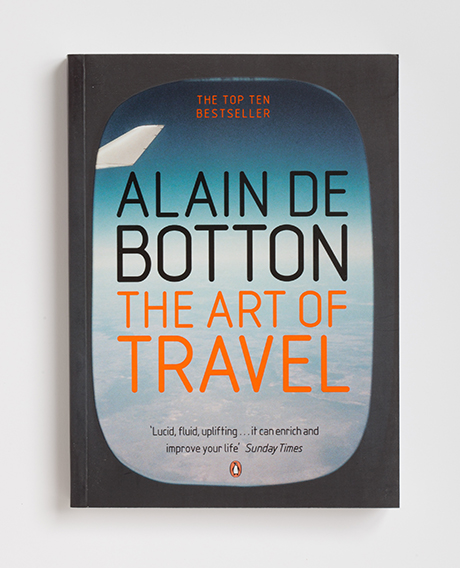
Even if you’ve never been out of the country, an overseas holiday is likely to be something you’ve dreamt of. All of us have probably got travel to a special city, country or region of the world on our bucket list. Mine is Greece. It’s quite possible, though, I’ll never go to Greece. That won’t stop the idea of going to Greece looming large in my imagination. This is a point made by best-selling English writer Alain de Botton in his 2002 book The Art of Travel.

A big part of the joy of travel, argues de Botton, is the anticipation. We can daydream about visiting far off places while stuck in traffic after work. The thought of drinking ouzo at a white-washed Greek Taverna on the island of Hydra (where Leonard Cohen once lived with Marianne Ihlen) is a nice palliative to the everyday routine. Enjoy the idyll because the reality, de Botton stresses, may fail to live up to the idea in our heads. We build up a picture that leaves out the smog and congested traffic in Athens. Or the desperate street hawkers pestering you to buy cheap souvenirs.

The reality of travel may disappoint in other ways. De Botton humorously recounts how while in Barbados, he got into a major sulk-fest with his girlfriend over who got to eat the perfect crème caramel rather than the ugly one that had toppled over on the plate. Petty, obviously, but not unfamiliar to anyone who’s had a fight with their partner over something innocuous. Even in a beautiful place, trying as hard as possible to have a good time, you can end up grumpy and irritable. De Botton’s realisation was that you can’t escape yourself, and all your faults and foibles, by travelling to another location.

On the flipside, de Botton eulogises the experience of transit places, like hotel lobbies, airport lounges, ferry terminals and roadside cafés. When experienced as a solitary traveller, these places can generate feelings of tranquillity. Alone in a transit place, we are freed from the masks we wear in various everyday settings. We have to be a certain person at work or with different family members, with our spouse. Everyday life has many expectations. Sitting in an airport lounge, those expectations are removed. We can take a break from worrying about what people think of us. Here de Botton nails why travel is often enjoyable. Because it affords us the chance to escape, if only for a short time, the roles in life we normally have to play. This suggests we don’t have to spend a lot of money or go far away to access this “me time.” Sitting at the bus stop on a beautiful autumn morning might do the trick. 

De Botton writes chapters in entertaining prose on landscape, the sublime, on curiosity, on the exotic—all part of the complex motivations for travel. One particularly interesting chapter is about how artists can essentially create a place. This is what Vincent van Gogh achieved for Provence in the south of France with his expressive paintings of wheat fields, orchards, peasant farmers and cypress trees. For de Botton, Provence was inseparable from his love of van Gogh’s paintings of the region. It was the reason he wanted to go there. On arriving in Provence, however, he was underwhelmed. The landscape he observed was kind of boring compared to van Gogh’s paintings. Which raises the question: is viewing a beautiful painting of a place, reading a book about it, in some way more satisfying than actually going there? Experiencing great art, de Botton concludes, can be a substitute for physical travel.

In the last chapter on habit, de Botton urges us to break out of our routines and adopt each day a “travelling mindset”. To consciously observe with wonder the world around us, as we often do when we’re on holiday in a place we’ve never been before. In these times of Covid, perhaps we can work harder on the art of travel, seeing more while moving less. 

Standard
Northern Advocate Column, Uncategorized

Dead monarchs and the cancelling of debts

17 November 2022

When the kings of the ancient Sumerians died or were overthrown by a rival, it was customary for a time to cancel debts for ordinary citizens. The wiping of debts was like a society reset. A necessary one in those early days of civilisation, when the cultural memory of more egalitarian communities still lingered.

Four and half thousand years ago, in the land that’s now modern-day Iraq, debt and early forms of money were relatively new, as was control or ownership of land. In these centralised economies, Sumerian peasant farmers could get into difficulty and incur debt. If it got unpayable, they might be forced to hand over land to creditors or the state. Often then having to sell themselves or family members into slavery. A drought, declining yields, invasion by another regional power, raids by nomads, or high taxes, could all see a peasant family’s fortunes and status in society plummet. Meanwhile, those lucky or in a position to play the system could amass a greater share of wealth.

The problem was, hierarchy and inequality weren’t good for society’s morale. When there are winners and losers, what reason do the losers have for sticking around to defend the winners from an invading army or nomad raiders? Some might prefer to join the nomads or engage in some banditry instead. Hence the practice of cancelling debts when a new monarch came to power. It was a practical way of maintaining the allegiance of commoners to the state and to the privileged hierarchy at its centre.

I tell this tale from the ancient world because there are parallels with today. In many countries, personal debt is high, fuelled by a house price boom and the spiralling cost of living. Wealth disparities have only grown since the Covid pandemic hit. Young people who aren’t from wealthy families are feeling aggrieved. Inequality is stoking political tensions in every country, whether mature democracies or oligarchal states like Russia and China. And it’s contributing to military tensions between nations. Rather than deal with the inequalities, one response is to try and unite a country by drumming up nationalism or even starting a war.

This is the world in which New Zealand might start looking at constitutional change following the death of Queen Elizabeth II. There will be different ideas about what we should do and at what speed. But regardless of who our head of state is (or whether one is even needed), shared allegiance to the state is undermined by inequality. The Sumerian rulers understood this. That’s why when one monarch died and a new one ascended the throne they tried to heal society by cancelling debts. The goal was to restore some equality (and political stability) which had been eroded in the previous years.

Skip forward a few millennia. On September 26, New Zealanders will get a one-off public holiday to mourn the death of Queen Elizabeth. A surprising move perhaps in these supposedly modern times. The Labour government has been smart (some might say calculating) in realising the opportunity to try and unite us in mourning, no matter how forced it feels.

While we’ll take the paid holiday, I’m sure many of us would prefer our debts were cancelled, like in Sumerian times. And maybe that idea is not so far fetched. Word is, if Matthew Hooton writing in the NZ Herald can be believed, Labour is considering cancelling student loan debt as its big election year promise. In the United States, President Biden already has plans to cancel $10,000 worth of student debt for low-to-middle income borrowers. At least some in ruling circles understand that you can’t have a functional society when citizens are overburdened with debt and wealth inequalities are left to grow unchecked.

The vast stretch of time and geography between an ancient Middle Eastern civilisation ruled by kings and modern New Zealand seems, on the face of it, enormous. It’s tempting to think we share nothing in common with those people and their attempts at state management. And yet old problems persist, giving rise to the demand for old solutions.

Standard
Northern Advocate Column

New Zealand’s Climate Change Commission still puts growth before planet

New Zealand’s Climate Change Commission a few weeks ago released its draft advice to the government for consultation. The vision statement describes the future Aotearoa as a veritable utopia. This future land of ours will be “thriving,” “equitable,” “inclusive,” and “climate-resilient.” Carbon emissions will be low, we’ll have a “flourishing bio-economy,” and we’ll be “respected stewards of the land.” Transport will be “accessible to everyone equally.” Everyone will live in “warm, healthy, low emitting homes.” There will be “very little waste”, and energy will be “affordable.” Sounds wonderful doesn’t it? All we have to do is follow the advice of the report’s seven co-authors. 

Some of that advice is good, like getting heavy freight off our roads by using rail and coastal shipping. And if the government were to take up the commission’s recommendations, new road construction would stop, and spending would be immediately diverted to the electrification of rail and public transport. The more I read through the report, however, the more I started to question its underlying assumptions. A major problem is how carbon emissions are calculated, which forms the whole basis for the proposed emissions reduction targets. Our emissions are those which are physically produced in this country when we travel domestically, fire up factory furnaces, and light our gas cookers. And when the country’s 10 million cows burp. Anything we import into the country isn’t included in our emissions. 

According to the Climate Change Commission, a significant chunk of our transport emissions can be reduced by importing electric cars. They advocate phasing out the import of petrol-fuelled cars by 2032. The point is, the carbon emissions generated by the manufacture of all these electric cars won’t be included in our ledger. Though we’ll be the ones using them. Electric vehicles and their batteries are made with metals, plastics and raw materials sourced from around the world. The mining and manufacture of those materials are heavily reliant on fossil fuels, not easily replaced by renewable energy. Suppose the electric vehicles are then made in Germany, China and the United States. In that case, a substantial amount of the electricity used in the assembly will come from coal and gas-fired power stations. There are limits to how much low-cost renewable energy those countries can produce to cover the energy needs of their heavy industries. 

It’s not just electric cars. New Zealand will have to import solar panels and wind turbines to generate the increased electricity we’ll need. As a country, we’ll be shopping our way to net-zero carbon emissions, consuming products with a high component of fossil fuel use in their construction and transportation. Effectively, we’ll be outsourcing our carbon emissions to other countries, where it will be their problem. 

Another issue with the commission’s report is that our agriculture sector’s carbon equivalent emissions are dealt with lightly. There’s no call to regulate herd numbers or impose costs on our leading export earner, dairy. Farmers will largely find their own way by fine-tuning current farming practices and using new technologies. If every country goes easy on their biggest export earners, global emissions reductions will never progress at the necessary pace. 

The Climate Change Commission is proposing we do something to reduce New Zealand’s emissions, but not too much that economic growth is adversely impacted. This is spelt out in passages in the report. It’s admitted that only a certain level of emission reduction is “possible at home” and that “offshore mitigation” will be needed. That means industries offsetting emissions by purchasing carbon credits overseas or investing in “carbon sinks,” like forest plantations in Siberia. The need for offshore mitigation assumes that other countries can do better than us. If all countries take this attitude to protect their economies and lifestyles, overall emissions reduction is clearly impossible.

The Climate Change Commission’s report is an overly optimistic vision of “green growth” that relies on importing high technology products and offsetting the emissions we’re unwilling to cut. That way, our economy, the commission predicts, will still grow 60 per cent by 2050. If the world economy grows at that rate, carbon emissions will continue to rise globally as a result of the massively increased energy demand. And the worst-case scenarios of catastrophic climate change will be inevitable.

Standard
Northern Advocate Column

Referendums: one tool in the democracy toolbox, not always the best

18 November 2020

I used to think we should have more referendums—the binding kind, which gave politicians no wriggle room to ignore us, the people. It seemed so sensible to me, so obviously democratic. Fair decision making simply came down to the maths. More than 50% of the vote and you had a decision. This was ultimate democracy, where everyone’s voice was heard and tallied. 

The high point for me was the 1993 referendum that gave us MMP. We made the politicians do something they didn’t really want to do. And I was on the right side of history (though only by a slim margin, 53.8% voted to change our electoral system).

But later, came a low point. The referendums on changing New Zealand’s flag got really odd. Many people on the left, who you’d expect to wish the Union Jack gone, voted for the status quo because they didn’t like John Key. And choosing from uninspiring alternative designs before deciding to ditch the current flag was the wrong way about. It all got a bit silly, so I didn’t even bother casting a final vote. So much for my enthusiasm for referendums.  

Our latest referendums, on euthanasia and cannabis legalisation, got me thinking more about this democratic tool I’d once been so enamoured with. One problem with having a referendum is that once the referendum is done there’s little likelihood of having another on the same issue anytime soon. But on many issues—cannabis legalisation probably being one—different generations can think differently. So the majority opinion may shift as the years pass. Making decisions by referendum, unless we keep voting on the same issue over and over (which no one wants) doesn’t allow for the majority view to change over time. We’re stuck with the cannabis decision for a while now. For a government to ignore it would undermine the whole point of having the referendum. This tallying of “for” and “against”, doesn’t provide the opportunity for a large minority to make change that others will come to agree with, or at least accept, later. Democracy can tolerate and should allow, on occasion, minority leadership. Referendums don’t enable this, which is a weakness.  

Another problem with referendums was most clearly seen with the Brexit vote in Britain. A narrow vote for leaving the European Union imposed a decision on nearly half the population that they strongly disagreed with. The brutal maths of a decision based on a majority vote leaves no room for compromise or arriving at a consensus. Having close to 50% of the population living with a major constitutional decision they don’t agree with is going to create problems.

It’s not just countries that grapple with how to make democratic decisions. Does a company, a school, a union or a sports club make decisions via consensus or by putting things to a vote? Having a vote leads to winners and losers. It can compromise the functionality of the group, leading to splits and unhelpful antagonism. Getting consensus is a skill, it requires a different kind of leadership than calling for a vote. Building consensus requires everyone (or at least most) in the group wanting to achieve a consensus decision. Majority voting doesn’t require that you engage with the other side to reach a position somewhere in the middle. It may not encourage carefully listening to what other people have to say. 

Now I’m not advocating that we stop having referendums. It’s just that my own view of them has evolved. Democracy is a more difficult and nuanced thing in practice than I once imagined. And it isn’t a prize on its own. It’s worth asking, what are we trying to achieve with democracy? I’d argue it’s fairness, justice and equality of opportunity to lead a flourishing life. Democracy should be regarded as a set of tools, not just a hammer. With multiple tools, we construct a house (a whare) that aims to achieve the greatest human well-being and reduce any harm and suffering.

Standard
Northern Advocate Column

Small and big water users on a collision course

9th September 2020

“It never rains but it pours.” Having experienced the extremes of weather this last 12 months, an appropriate re-wording of that old saying would be: “If it’s not a drought, it’s a flood.” 

Northland has always had seasonal differences in rainfall. Droughts and storms that cause extensive flooding aren’t new. But last summer was the hottest and driest I can recall, and it’s been followed by the wettest winter. Our climate is obviously changing. Climate scientists are predicting that what we’re experiencing may well be the new normal. 

Regular droughts will put a strain on water supplies and cause disputes between different water users. Those tensions are already emerging. There’s been much interest in the application by avocado growers to access an additional 6 million litres of water per year from the Aupōuri Peninsula’s aquifer. The only source of water for many Far North locals. It’s not the only area where water consents are being sought. 

A common feature is the large size of the operations wanting increased access to water. In Northland, like the rest of New Zealand, farming enterprises are getting bigger. This is a model of land use and ownership heavily dependent on scale to generate operating efficiencies. Companies are often highly leveraged to banks. Their focus is on delivering a single food product to supermarkets or for export. Leaving aside the justice of land being increasingly owned by a few, this model has a lot of risk contained in it. Prices can fluctuate, interest rates can go up, input costs can increase, or it might not rain enough. 

Too little rainfall at crucial times of the year is a risk that big agriculture wants to mitigate. These enterprises could build water storage themselves, capturing water during periods of heavy rainfall in a similar way to a householder or bach owner collects water in a tank. That would be a private cost. Companies with slim margins and an eye on reducing costs would rather access water cheaply from underground aquifers. Or have the government and local councils pick up the costs of irrigation projects or mass water storage. 

Recently the government gave $12 million for a water storage project coordinated by the Northland Regional Council. The project received $18.5 million last year. That’s likely to be only the start of public money for water storage and irrigation projects that will be essential to new large scale horticulture ventures. 

The high-cost, high-risk vision of agriculture has clearly got backing within government and local councils. It’s not, however, the only vision of farming for Northland. One better adapted to the extremes of weather caused by the atmosphere warming is small scale mixed farming producing for a local market. Of which there are plenty of pioneers in Northland today. 

Regenerative agriculture uses practices to keep water in the land. Organic material is used to maintain healthy aerated soils that can absorb and retain moisture. The emphasis is on a diversity of crops and animal husbandry. Different crops may succeed one year where others fail without destroying the viability of the whole farm. A term often used in ecology circles to describe this type of farming is resilient. It’s adaptable in the way that planting a single crop over 400 hectares is not. 

Given what we know about climate change, small scale organic farming practices producing a variety of quality food for local people needs to be our future. It’s not the dynamic that’s currently playing out across Tai Tokerau. Big is in the ascendency.

Climate change and farming intensification are on a collision course in Northland, with water access the flashpoint. Where does public sentiment lie? Is it with the big landowners and their high-risk model, or with the resilient practices of the small organic farmer?   

Standard
Northern Advocate Column

‘A Small Farm Future’ by Chris Smaje

14 November 2020

Imagine no Fonterra, no mega-dairy farms, no super-sized avocado orchards. Imagine that shiploads of rice, wheat, and—oh my god!—coffee, weren’t landing on our shores. Imagine instead that all the food we eat is grown locally on small farms, less than a few hectares. That’s the future for the world envisaged by Chris Smaje, author of the new book A Small Farm Future published by Chelsea Green Publishing in the UK. 

There’s long been recognition in permaculture and ecological circles that small-scale mixed farming is the future we need. The strength of Smaje’s book is that he tackles head-on the possible criticisms of this small farm future. Like the idea that small farms, with little or no fossil fuel inputs, couldn’t possibly feed the world. To counter that argument, Smaje makes a case study of Britain in 2050 with an increased population of 83 million (thanks to the benevolent acceptance of refugees fleeing from countries worst affected by climate change). 

He goes through the process of dividing up the land and labour of the country, factoring in conservative estimates on yields, and making choices about what needs to be grown to produce the necessary calories. There would be more vegetables eaten, including potatoes a thousand ways, and a lot less sugar and red meat. The figures he comes up with, carefully explained and justified with scientific rigour along the way, say, yes, it can be done. There might be political, economic and social reasons why Britain doesn’t immediately embrace small farm self-sufficiency. Still, this doesn’t mean, according to Smaje’s analysis, that it’s not possible. 

You often hear from New Zealand export farmers—of dairy and meat in particular—that they’re performing the necessary service of “feeding the world.” But the rest of the world, if land was owned and controlled differently, and if different social and environmental considerations reigned, could, in fact, feed itself. 

Being a small farmer himself, and with a science background, Smaje is careful about any claims he makes. It’s this sober analysis that actually makes Smaje’s book inspiring and worthy of repeated reads (he’s also a great writer). A Small Farm Future is theoretical, but it’s grounded in the limits that farming (and nature more broadly) has always imposed on the human species. One of Smaje’s common themes, bringing together economics, lifestyle and sustainability, is that accepting limits is healthy. Less destabilising and stressful of people and eco-systems than the illusion of no limits. 

Our high energy, high waste, globalised economy is clearly overreaching the limits of what the Earth can support. Cities, according to Smaje, for a host of social, economic and environmental reasons, will start to empty out. With a city exodus leading to an expanding rural population, then land ownership, Smaje predicts, will be a flashpoint political issue. They’ll be an urgent need for land reform that makes land available to small farmers to own. 

The later parts of the book are perhaps the most fascinating and also original. Smaje speculates on what a small farm society might look like. He stresses, for instance, the importance of avoiding the exploitation of women’s work by patriarchal farmers. There’s no reason why the values we currently hold dear—like gender equality—can’t be part of the legal framework of a small farm society. Smaje does anticipate, however, the eroding power of the centralised state, conceding more power to local populations to decide things for themselves. One interesting chapter is titled “From Nations to Republics.” 

Smaje has lots of good things to say about peasants, both historically and today. As someone who fancies himself as a neo-peasant (more in my dreams than in reality), I’m attracted to his unapologetic advocacy of the peasant life. Though it would have to be free of domination by colonial or financial elites. Rehabilitating the peasant as a positive term might stress them as autonomous, multi-skilled, fiercely independent, creative types, who are keen scientific observers of their environment. 

Smaje never presents his small farm future as a utopia. Without fossil fuels, whether restricted due to attempts to reduce carbon emissions or because of increasing costs over time, farming will require a lot more human and animal labour. Smaje is sceptical of a super high tech world of robots and the automation of everything. The energy inputs of such a world—truly utopian—just don’t stack up. Besides, as Smaje persuasively argues, we might find that working on a farm to sustain ourselves and our families, and generating a small surplus, makes us quite happy. That life might be better than doing a bullshit job working for someone else and addicted to whatever passive entertainment global internet-based media companies feed us. Smaje isn’t afraid to make moral judgements. 

An ever-expanding global economy requiring more and more energy inputs—which renewables can’t possibly satisfy—is the delusional future. In one hundred years (probably less), whether we plan for it or not, more people will be working on the land, cities will have declined in population and influence, fossil fuels will be scarce or non-existent. Getting started on embracing the positives that derive from necessity, and trying to make that transition as orderly, just and fair as possible would probably be a good idea. Books like A Small Farm Future are important. They’ll plant seeds in the minds of farmers and searchers for an ecologically-centred and spiritually satisfying way of life. 

Standard
Northern Advocate Column

A holiday to celebrate Matariki, yes!

12 June 2018

When it comes to our public holidays I range from passable participation, boredom, to cynical disbelief―why are we celebrating that? Queen’s Birthday definitely the latter.

A paid day off is always great, but I want something more from a holiday. I want to feel. 

Christmas and New Year come closest. Who doesn’t like reaching the end of the year and enjoying a relaxing time with family. I get that. 

Northland Anniversary Day? Meh. 

Waitangi Day? I’ve enjoyed days at Waitangi itself, but despite attempts to establish the Treaty as a founding document for this country I’m too aware that it really was a calculated attempt by the British to claim dominion over this land. Too much post-colonial guilt for it to feel like a holiday should. And not everyone in the country seems to be uniformly celebrating the day, so it feels awkward, like a work function where there are unresolved tensions between management and staff. You just can’t quite get into it. 

I like the length of Easter, but chocolate eggs and bunnies mashed-up with the biblical story of Christ’s death on the cross and rising a few days later doesn’t do much for me. 

I understand that Anzac Day means a lot to some people. It’s the kind of holiday – commemoration is a better word – that I’m looking for, something with a depth of feeling. It’s just that the nationalist myth-making, the ties it still reinforces to Western powers, the uniforms and hierarchies, don’t sit well with my anarchist-inclined tastes. 

Labour Day is an interesting one. We got that in 1900 to mark the struggle by unions to achieve an eight-hour working day. But not much is made of it, really. A symptom perhaps of New Zealand’s working-class history being so successfully removed from our everyday consciousness. A kind of collective lobotomy, as if we’ve all been playing Mike Hosking through headphones at night. 

Our line-up of public holidays just feels tired and stale to me. Traditions and continuity are all well and good, but change is necessary too. So I’m joining the chorus of people calling for Matariki, the Māori New Year, to become our newest holiday season. A chance for reflection, hearty dinners and public festivals of art and entertainment. 

It should be two days off, one either side of a weekend in June. Replace the outdated Queen’s Birthday and then increase our public holiday count by one to 12 (still behind Australia’s 13). 

I have in mind a truly internationalist holiday. Yes, with a perspective indigenous to this land, but mid-winter celebrations are common to most cultures around the world. Under the umbrella of Matariki, celebrations could reflect the full diversity of communities that have come to Aotearoa. Some by following the stars long ago, others more recently watching movies on the backseat of the airline passengers in front of them.

It should be a holiday season that combines local belonging with a global consciousness. A holiday fit for that purpose is something I could embrace wholeheartedly. 

Matariki, it’s in the stars. 

Standard
Northern Advocate Column

Some thoughts on Taylor Swift’s ‘folklore’

Taylor_Swift_-_FolkloreThe cover of Taylor Swift’s new album folklore is a black and white photo of the singer-songwriter in a long coat standing in a forest of tall, slender trees. Swift is small, barely recognisable, her head tilted slightly, looking up at the nearest tree.

Taylor Swift isn’t small though. She’s a global pop star, one of the biggest. Yet the conceit of the cover is that even Taylor Swift is tiny compared to the majesty of nature.

While there’s no back-to-nature roots music on the album, the songs are more humble, less ego-driven, not so much caught up in the swirl of celebrity culture. The pop glam, the brash put-downs, the revelling in self-mythology that were part of Swift’s recent catalogue is largely missing here. Most of the songs are about characters other than Swift herself. Whatever past experiences she’s drawing on from her own life, these are seamlessly woven into narratives and character sketches that we ordinary folk can identify with.

Many of the songs have the narrator recalling the past. As in the lost love of a woman’s “roaring twenties” in the opening track ‘The 1’; and the teenage love dramas in ‘Cardigan’, ‘Betty’ and ‘August.’ There are memories of being seven years old in the gorgeous ‘Seven’, with its aching poetry of nostalgia and never to be regained innocence and wonder. A bittersweet melody accompanies these opening lines: “Please picture me in the trees/ I hit my peak at seven/ Feet in the swing over the creek.” We can picture Swift as a child on a swing, but we also picture ourselves. We all have such moments from our childhood that we remember and cherish.

Swift develops the scene with the lines: “I was high in the sky/ With Pennsylvania under me.” Then switching registers, a sudden question: “Are there still beautiful things?” And it’s in this one line that we have a connection to the bigger picture of our lives amid a global pandemic and whatever is to come. Are there still beautiful things? Yes there are, and ‘Seven’ is one of them.

Most of us have a history of failed relationships with people. We look back with some regret and maybe a little maturity. Hoping we won’t repeat past mistakes. This is the key to the album’s title. The folklore here is not the rural tradition of folk music, but our own past lives and what we can learn from looking back on them.

There’s often a double-sided nature to our reminiscing though. We might hope we’ve grown and gained insight into ourselves, but there’s still the lingering sense that our youthful dramas were the best of times. Falling in and out of love with people and places (and even ideas or political creeds) had an emotional intensity that we can look back on with envy. There can be regret or sadness in recalling our past, but part of us wishes we were still there. Taylor Swift understands that contradiction, like when she sings in ‘August’: “Back when we were still changing for the better/ Back when I was living for the hope of it all.”

In ‘This is me trying’ she likens herself to a once flash new car or bike: “I’ve been having a hard time adjusting/ I had the shiniest wheels/ Now they’re rusting.” There is no going back. That’s accepted. Contentment, if not drama and adventure, can be found in the present. As in these poet-worthy lines: “Time, mystical time, cutting me open, then healing me fine.”

Musically, the album doesn’t stray far from slow piano ballads, with textured and subtle, mood-amplifying guitar. There are accompanying electronic effects, and the album sounds very produced, but it’s intimate in a way that past Taylor Swift albums are not. For all its layered production, the album still feels like musicians making music in a cabin somewhere in an untouched forest in a mythical place called America. To understand, perhaps, what this album feels like to listen to, go back to that cover photo. If the photo speaks to you at this time of coronavirus, then so might these 17 songs.

Standard
Northern Advocate Column

My cricket heroes

23 December 2017

I grew up in the 1980s, which meant, like many boys of that generation, cricket was a big deal. The eighties to cricket watches of my age is still the golden period, the best of times, the haloed era.

This had a lot to do, of course, with one man, Richard Hadlee. His skill, yes, but also his style: the thin moustache, the stutter step to start his run; his glide to the crease and seemingly effortless whip-smart action.

As a kid, I imagined him as a Robin Hood, played by Errol Flynn perhaps. A connection I made from watching the old movies that screened on TV in the weekends.

If I’m honest, cricket for me has always been about the television experience: listening to the commentary, seeing the ball swing or nip back off the wicket; the balletic elegance of a Martin Crowe pull shot, dissected in replays. It’s the close-ups of the batsman’s face in a pressure situation. Or the mannerisms you picked up, which distinguished, say, a John Wright from an Ian Smith. These guys were my action heroes, my equivalent of the Avengers.

Hero worship can be powerful stuff. So many young cricketers I remember playing with used to walk like Martin Crowe, stand as he stood at the crease.

Time is not always kind to your heroes, however; your estimation of them wears like a cricket ball on an Indian dustbowl pitch. And sport finds its place in the jumble of your life, somewhere over the boundary, no longer on the green of the field.

And yet, those eighties cricketers cannot be knocked entirely off their pedestal, because that time will always be when I was a kid growing up. Still imagining you’d play for your country and be able to bowl a ball that pitches on middle and swings enough to miss the bat and hit the top of off.

I can vividly remember Hadlee bowling Australian batsman Steve Waugh like this. It looked so aesthetically perfect on TV, with Hadlee celebrating with the cool air of someone who expected it to be so.

Today, international cricket returns to Whangarei after many years. There’ll be plenty of kids there to see their heroes, and there’ll be some older guys too, who perhaps grew up, like me, watching cricket on TV in the eighties.

And there’ll be people attending who’ve been involved in Northland cricket for decades, as players, coaches, club administrators. They’ll be at Cobham Oval to watch, hopefully, a full game, quietly satisfied to have the Black Caps playing the West Indies in Whangarei.

Cricket, like everything in the world, is changing. New stories are being written. But if Tim Southee bowls Chris Gayle I’m sure there’ll be a familiar sounding cheer go up from the crowd.

What does it mean in the grand scheme of things? I don’t know. Perhaps it’s just something that connects us to the kids we once were.

Standard
Northern Advocate Column

Bananas and the home economy in the time of coronavirus

EW36CLTUPBEU3DT6KC3NZ3V66I

I want to start off talking about bananas. Specifically, the bananas ripening in a large bunch on the plant next to my garden shed. It’s the second bunch we’ve had, and I’m very proud. I bought one plant from the Tikipunga Markets in Whangārei six years ago for less than $10. A slow return on the initial investment, but with two bunches I’m now showing some profit. And I’m likely to show more as time goes on, as a banana sends out shoots from the base of an established tree, which you can dig up and plant somewhere else. So I’ve got banana trees growing at multiple spots around the section. More bunches of bananas will follow.

All this banana activity involves a little bit of work, planting and harvesting. You could call grating the hard green bananas and making plantain fritters work as well. Or even putting the ripe bananas in a blender to make a smoothie. It’s work, however, that’s not going to show up in New Zealand’s GDP figures when they officially come out. A smoothie purchased and drunk in a cafe before the lockdown will. That’s because money was used to pay for it, so it’s work done that’s part of the measurable monetary economy.

When released, New Zealand’s GDP figures will show a big fall in economic activity due to the struggle to keep coronavirus out. But those GDP figures won’t accurately reflect all that’s been going on during the lockdown. Because GDP doesn’t measure unpaid work. Since so much store is put in the GDP figures (which must always go up), and we’re all caught in the necessity of earning money, we tend to value paid work over unpaid work.

Mike Hosking, in one of his recent columns, said that we can’t have everyone at home doing nothing for much longer. Yes, we need to get back to the workplace and earn some money, but I doubt many of us have been doing nothing, as Hosking claims. For instance, I’ve put in two new vegetable gardens. I’ve finally finished painting the house (hallelujah!). I’ve cooked and I’ve cleaned. I’ve done dishes until they’ve come out my ears (we don’t have a dishwasher and four people at home all day generates a lot of dishes). We’ve made our own bread, tortillas, muffins and pizza bases. I’ve helped the kids with their school work.

And when walking around Hikurangi, I would say my neighbours have been busy too. Sections are looking good. All sorts of odd jobs are being done. My immediate neighbours have three children under the age of 7. Stuck at home with kids that young for four weeks is hard work.

Kiwis haven’t been doing nothing. The national economy, as measured in monetary terms, will have contracted significantly, but home economies have undoubtedly expanded. The word “economy” actually comes from the ancient Greek word, “oikonomos”, which means “household management.” The original economy, you could say, was the home.

Now, I don’t want to deny the financial hardship many are experiencing right now, especially with the cost of housing, but there is work you can do for yourself at home that saves money. Maybe think about how you can expand your home economy. Grow, bake, cook, repair, paint, tend, nourish, fix, preserve, care, build, and teach. Plant bananas, the Northland climate is excellent for them. It might be that if you’re a couple, you can live off one income instead of two if you consciously develop the home economy.

And if you do become unemployed, temporarily or longer-term, don’t listen to anyone who says you’re not doing anything. There’s plenty that you can do that’s valuable to yourself and other people in your life. Household management is an important role.

Standard