
Northern Advocate Column

GST on new build homes means people are borrowing to pay a tax

13th March 2019

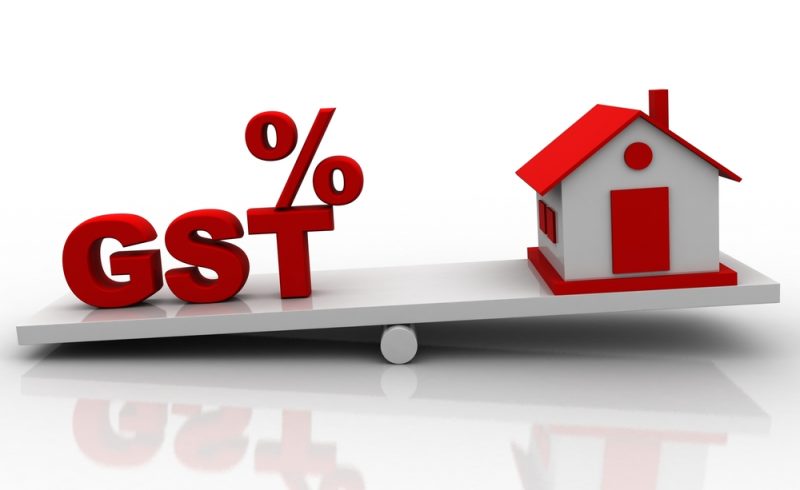
I want to open up another front in New Zealand’s “great tax debate” of 2019, it’s the 15% GST on new build homes.

Consider a new home advertised on the market for $600,000. Included in that price is GST of $78,261. The tax is collected by the property developer on behalf of the government, but is paid by the end consumer, the owner-occupier of the home. That’s a big chunk of tax. Worse, a first home buyer taking out a mortgage is going to be borrowing to pay it. Say you manage a $50,000 deposit, leaving $550,000 to pay back to the bank over 30 years. The GST component of your outstanding debt will be $71,739. Taking ASB’s current floating interest rate of 5.8%, you would be paying $79,796 in interest on the GST alone. More than double the original tax calculated on the value of the home. Your tax bill has effectively ballooned to  $158,000. The extra eighty grand doesn’t go to the government, of course, it’s more income for the bank. 

That’s the scenario for a new build, but it doesn’t stop there. Old houses are renovated, extended and maintained over time. Homeowners pay GST on building materials and labour by plumbers, chippies, electricians, etc. The GST incurred will be factored into the asking price when people sell.

It’s also true that GST on new builds has an influence on the price of all homes. The seller of an older home next door to a new build which has 15 per cent taxed on to the asking price has room to ask for more for the house they’re selling. A degree of market equalisation across new builds and existing homes is going to take place. 

It’s reasonable to conclude that GST on new builds, as well as GST on work done on existing homes, is contributing to all homes being more expensive. The mortgage payments of Kiwis are therefore higher, and the profits of the big four Aussie banks which dominate mortgage lending that much greater. International shareholders of those same banks are, I’m sure, grateful for our largesse. 

You’d think this would be national outrage, but there’s complete silence. The final report by the Tax Working Group rejected making any exemptions to GST. Even though exemptions and variable rates are the norm for countries that have a goods and services tax. New Zealand is the odd one out.

Defenders of GST tell us that it’s simple and shouldn’t be tampered with. That’s its beauty, they say. Perhaps banks can appreciate its beauty, but working your arse off to pay a mortgage that includes substantial interest on a tax, seems the most ugly of taxes to me. It’s fundamentally unjust to have to borrow to pay a tax. That goes for houses, but also cars, washing machines, funerals, and any other item people are forced, out of necessity, to borrow for. 

Here’s a challenge, then. Maybe all the politicians, columnists and media pundits horrified at the thought of having to pay tax on capital income, could summon the same outrage for GST’s impact on the unaffordable housing market. They might want to look at Britain, where their goods and service tax doesn’t apply to building materials and labour on new properties. Or they might refer to the GST rebate Canada has recently introduced to lower the price of new homes. Or perhaps we don’t have to look to overseas examples and conclude for ourselves that GST is a mongrel of a tax.

Borrowing to pay tax, when some people are making fortunes and not paying tax, just shows how obscenely weighted in favour of capital wealth our tax system is. 

Standard
Northern Advocate Column

New Zealand’s Climate Change Commission still puts growth before planet

New Zealand’s Climate Change Commission a few weeks ago released its draft advice to the government for consultation. The vision statement describes the future Aotearoa as a veritable utopia. This future land of ours will be “thriving,” “equitable,” “inclusive,” and “climate-resilient.” Carbon emissions will be low, we’ll have a “flourishing bio-economy,” and we’ll be “respected stewards of the land.” Transport will be “accessible to everyone equally.” Everyone will live in “warm, healthy, low emitting homes.” There will be “very little waste”, and energy will be “affordable.” Sounds wonderful doesn’t it? All we have to do is follow the advice of the report’s seven co-authors. 

Some of that advice is good, like getting heavy freight off our roads by using rail and coastal shipping. And if the government were to take up the commission’s recommendations, new road construction would stop, and spending would be immediately diverted to the electrification of rail and public transport. The more I read through the report, however, the more I started to question its underlying assumptions. A major problem is how carbon emissions are calculated, which forms the whole basis for the proposed emissions reduction targets. Our emissions are those which are physically produced in this country when we travel domestically, fire up factory furnaces, and light our gas cookers. And when the country’s 10 million cows burp. Anything we import into the country isn’t included in our emissions. 

According to the Climate Change Commission, a significant chunk of our transport emissions can be reduced by importing electric cars. They advocate phasing out the import of petrol-fuelled cars by 2032. The point is, the carbon emissions generated by the manufacture of all these electric cars won’t be included in our ledger. Though we’ll be the ones using them. Electric vehicles and their batteries are made with metals, plastics and raw materials sourced from around the world. The mining and manufacture of those materials are heavily reliant on fossil fuels, not easily replaced by renewable energy. Suppose the electric vehicles are then made in Germany, China and the United States. In that case, a substantial amount of the electricity used in the assembly will come from coal and gas-fired power stations. There are limits to how much low-cost renewable energy those countries can produce to cover the energy needs of their heavy industries. 

It’s not just electric cars. New Zealand will have to import solar panels and wind turbines to generate the increased electricity we’ll need. As a country, we’ll be shopping our way to net-zero carbon emissions, consuming products with a high component of fossil fuel use in their construction and transportation. Effectively, we’ll be outsourcing our carbon emissions to other countries, where it will be their problem. 

Another issue with the commission’s report is that our agriculture sector’s carbon equivalent emissions are dealt with lightly. There’s no call to regulate herd numbers or impose costs on our leading export earner, dairy. Farmers will largely find their own way by fine-tuning current farming practices and using new technologies. If every country goes easy on their biggest export earners, global emissions reductions will never progress at the necessary pace. 

The Climate Change Commission is proposing we do something to reduce New Zealand’s emissions, but not too much that economic growth is adversely impacted. This is spelt out in passages in the report. It’s admitted that only a certain level of emission reduction is “possible at home” and that “offshore mitigation” will be needed. That means industries offsetting emissions by purchasing carbon credits overseas or investing in “carbon sinks,” like forest plantations in Siberia. The need for offshore mitigation assumes that other countries can do better than us. If all countries take this attitude to protect their economies and lifestyles, overall emissions reduction is clearly impossible.

The Climate Change Commission’s report is an overly optimistic vision of “green growth” that relies on importing high technology products and offsetting the emissions we’re unwilling to cut. That way, our economy, the commission predicts, will still grow 60 per cent by 2050. If the world economy grows at that rate, carbon emissions will continue to rise globally as a result of the massively increased energy demand. And the worst-case scenarios of catastrophic climate change will be inevitable.

Standard